
Our direct Service Areas include the following
Detox, MAT, and Medical Referrals
Intensive Outpatient (IOP)
Alcohol and Drug (A&D) Treatment
Peer Support Specialist development
PS-CARE Program (Peer Support – Case management, Advocacy, Resources, Experience)
Relapse Prevention Program (RPP).
The Clinic provides a wide variety of services for those affected by SUD, including the following.
Individual counseling therapy
Psychiatric services
Family and group counseling
Substance use disorder (SUD/COD) intervention and treatment
Crisis intervention for law enforcement
Trauma informed treatment.
-
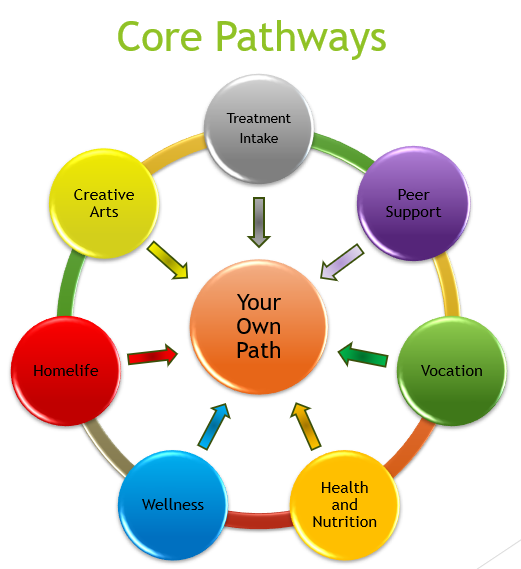
Our Process
Intake
SUD Assessments
Treatment Planning
Ongoing Counseling
“Your Own Path” Development
Peer Support
Diverse Peer-run support meetings
PS-CARE Teams (Forensic, Institutional, Mobile)
Peer Support Specialists Development
Vocation
Forensic Support (Incarceration, Court)
Career Planning
Training and Employment Referrals
Health & Nutrition
Healthcare Assistance and Referrals
Health and Nutrition Sessions
Wellness
Individual Counseling Sessions
Psychiatric Services/MAP
Mindfulness and Meditation Sessions
Spiritual Sessions
Homelife
In-Home PS-CARE
Certified Parenting Classes (CPS Approved)
Family Counseling
Greif Counseling
Legal referrals
Family-oriented Events
Creative Arts
Crafts and Fine Arts
Music
Dance and Theater
Sports and Hobbies
-
PS-CARE
PS-CARE Teams: Peer Support – Case management, Advocacy, Resources, Experience
Recovery. Delivered Where It’s Needed Most.
PS-CARE is a structured, team-based peer support model that brings recovery services directly to individuals with Substance Use Disorders—where they are, and when they need it most.Built on lived experience and evidence-based practices, PS-CARE teams provide non-clinical, recovery-oriented support that complements medical and behavioral health systems while building trust, engagement, and long-term stability.
A Complete System of Peer Support Care
PS-CARE is deployed through three specialized team models:Forensic Teams - Correctional Settings (Jails & Prisons)
Peer support inside facilities
Recovery planning and skill-building
Reentry preparation and continuity of care
Reduction in recidivism and relapse risk
Institutional Teams - Hospitals, Schools, and Treatment Environments
Bedside and on-site peer engagement
Support during crisis stabilization and discharge
Bridging clinical care to community recovery
Improving follow-through and reducing readmissions
Response Teams - In-Home, Emergency, & Community Crisis Response
911 diversion and co-response support
Family crisis intervention
Rapid engagement during overdose or acute episodes
Immediate connection to recovery pathways and service
-
Expanding to Rural Mississippi
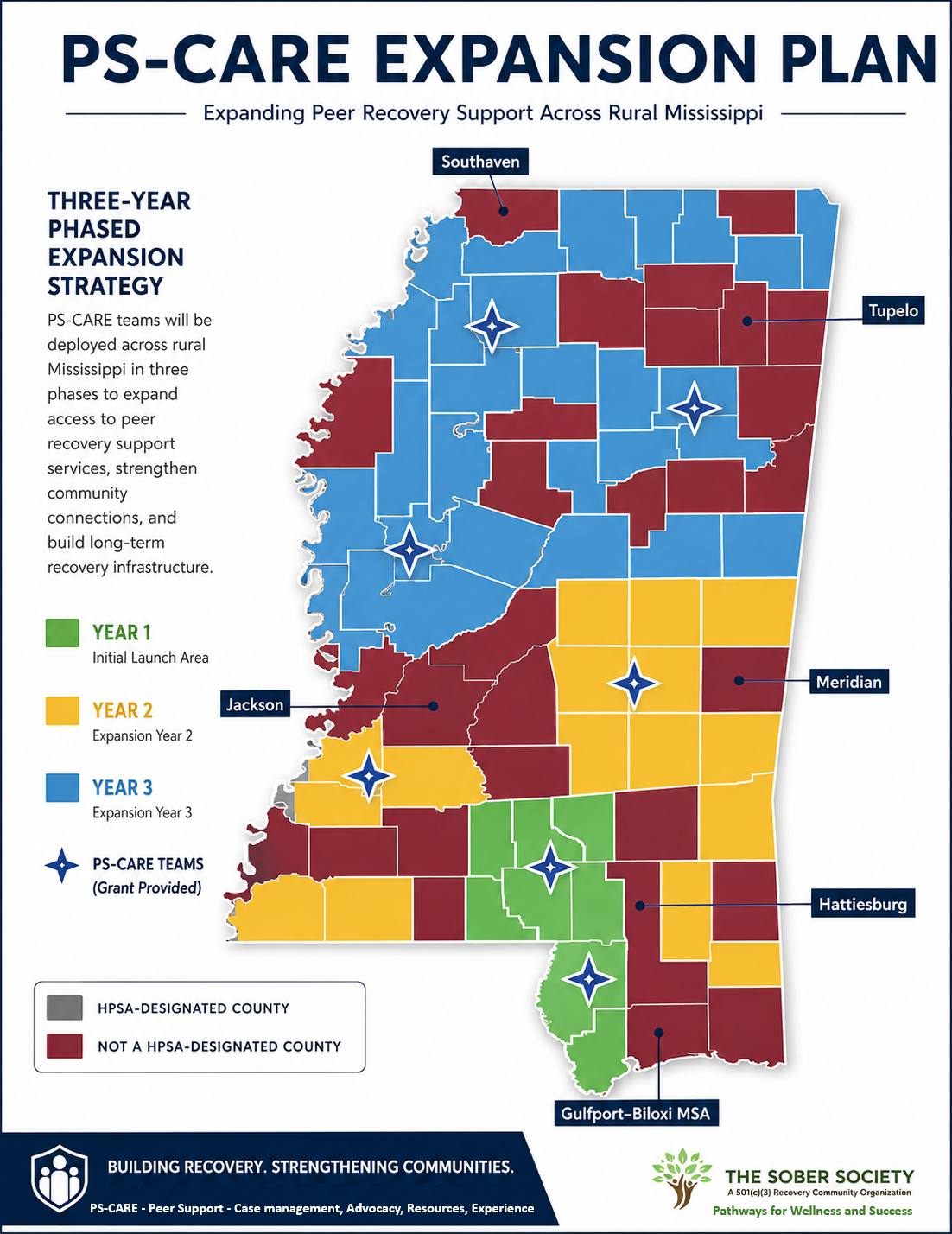
Expanding PS-CARE to Rural Mississippi is a three-year initiative by The Sober Society, a Recovery Community Organization (RCO), to expand access to peer-led recovery support services in underserved rural communities across Mississippi. Using its evidence-informed PS-CARE (Peer Support – Case Management, Advocacy, Resources, and Experience) service model and Pathways recovery framework, the project will establish a scalable network of Peer Recovery Support Specialists who help individuals build recovery capital, achieve long-term recovery, and successfully reintegrate into their families and communities. The project strengthens rural recovery infrastructure by integrating peer support within healthcare, criminal justice, emergency response, and community settings while expanding workforce capacity and community partnerships.
The project will serve rural counties across Mississippi through a phased three-year expansion beginning along the Mississippi Gulf Coast and extending into southwest, south-central, and additional rural regions of the state. The proposed service area includes approximately 1.5 million residents. The Sober Society anticipates serving 500 individuals annually and 2000 unduplicated participants over the three-year project period.
The target population includes adults 18 years of age and older with substance use disorders (SUD) and co-occurring mental health disorders (COD), including justice-involved individuals, individuals transitioning from treatment or incarceration, veterans, parents, and other adults experiencing barriers to sustained recovery. Many participants will require recovery support related to unstable housing, unemployment, limited transportation, family reunification, community reintegration, and linkage to behavioral health and recovery resources.
Through the PS-CARE model, trained Peer Recovery Support Specialists will provide individualized recovery planning, peer recovery coaching, family engagement, recovery capital development, housing and employment navigation, Recovery-Ready Workplace supports, reentry planning, community resource coordination, and long-term recovery follow-up. Services will be delivered through specialized Forensic, Institutional, and Response PS-CARE Teams, supported by the PS-CARE Academy, which will recruit, train, supervise, and mentor the peer workforce while maintaining fidelity to evidence-informed practices.
The project's goals are to expand access to peer recovery support services, increase recovery capital, strengthen housing and employment stability, develop Mississippi's peer recovery workforce, and build sustainable community partnerships that improve long-term recovery outcomes. Measurable objectives include increasing participant engagement in recovery support services, improving successful linkage to treatment and community resources, increasing housing and employment stability, expanding the certified peer workforce, establishing Recovery-Ready Workplace partnerships, strengthening community recovery infrastructure, and achieving all required SAMHSA performance measures through continuous quality improvement and SPARS reporting.